
Real-time race visibility for The Lost Sheep Triathlon.
How tablet registration, active timing, live tracking, and race dashboards supported a 310-athlete middle-distance triathlon in Kenmare, Kerry.
310
athletes entered
234
athletes started
10
active timing boxes
80 km
bike course
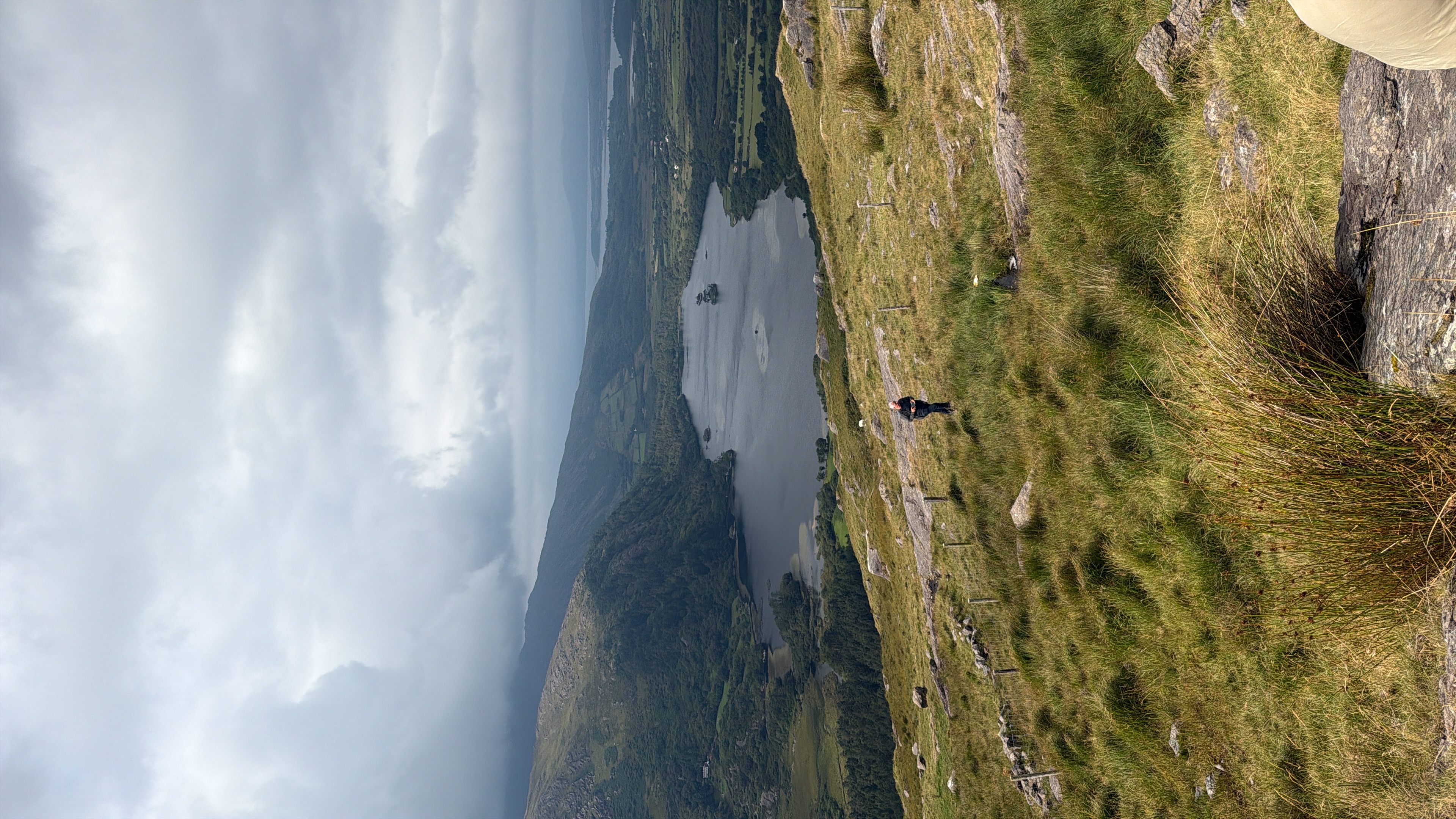
A demanding middle-distance triathlon in Kenmare, Kerry.
The Lost Sheep Triathlon was Monster Timing's first time supporting the event. With athletes spread across a long bike course and a multi-stage run, the organising team needed accurate registration records and a live view of race progress.
The event entered 310 athletes and used a connected workflow covering registration, dynamic chip assignment, active timing, live tracking, predicted times, finish-line reporting, and online results.
Replacing paper lists with a live check-in process.
Four tablets were used during Friday evening registration. Previously, registration staff used multiple sheets of paper and had to manually collate the records. Similar surnames could also lead to the wrong athlete being marked as arrived.
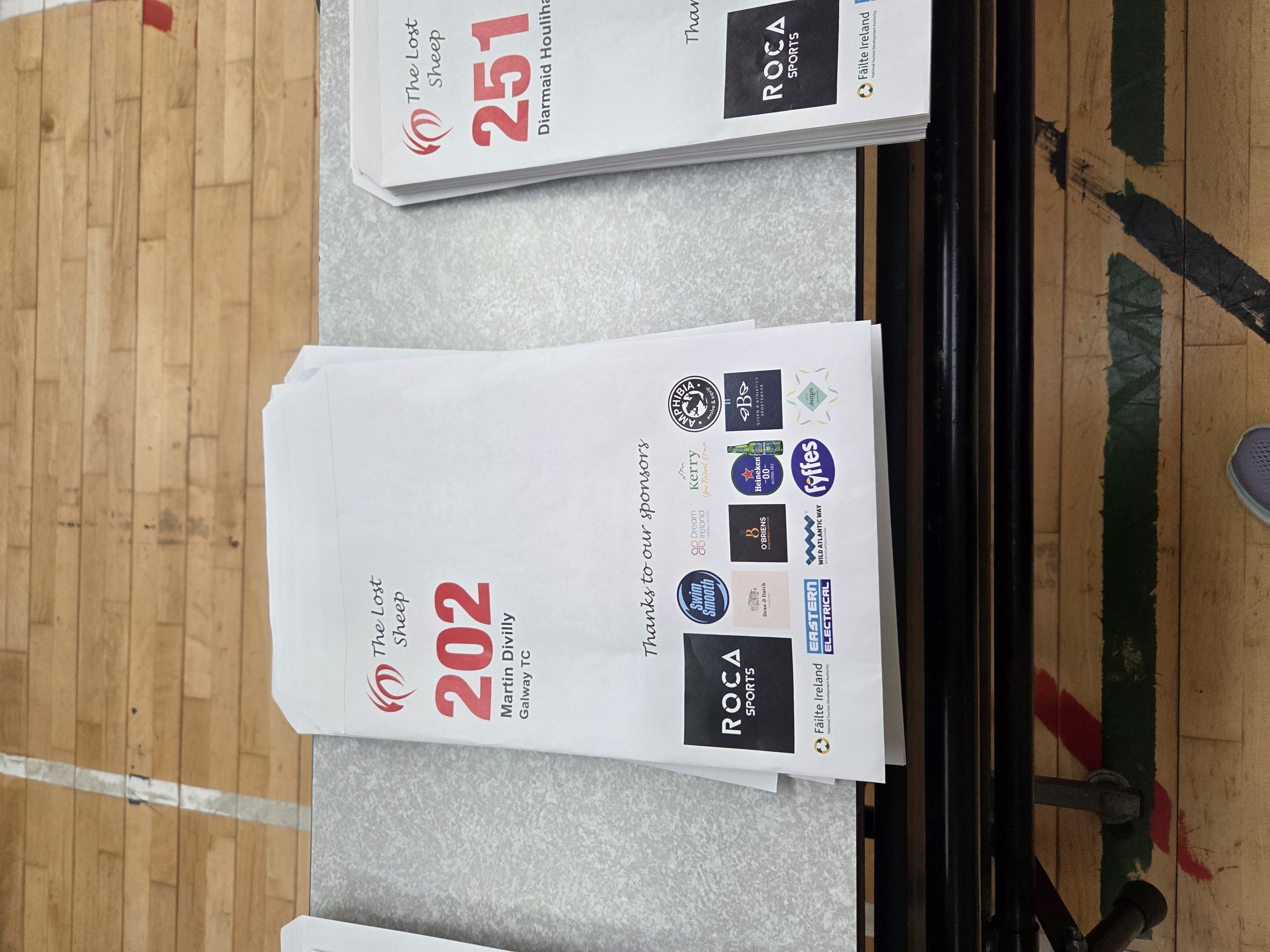
- Athletes could be found by name and matched to the correct bib number and race pack.
- Triathlon Ireland licence details, date of birth, and race category could be checked against the athlete record.
- Once checked in, athletes moved to the Monster Timing desk where a timing chip was dynamically assigned.
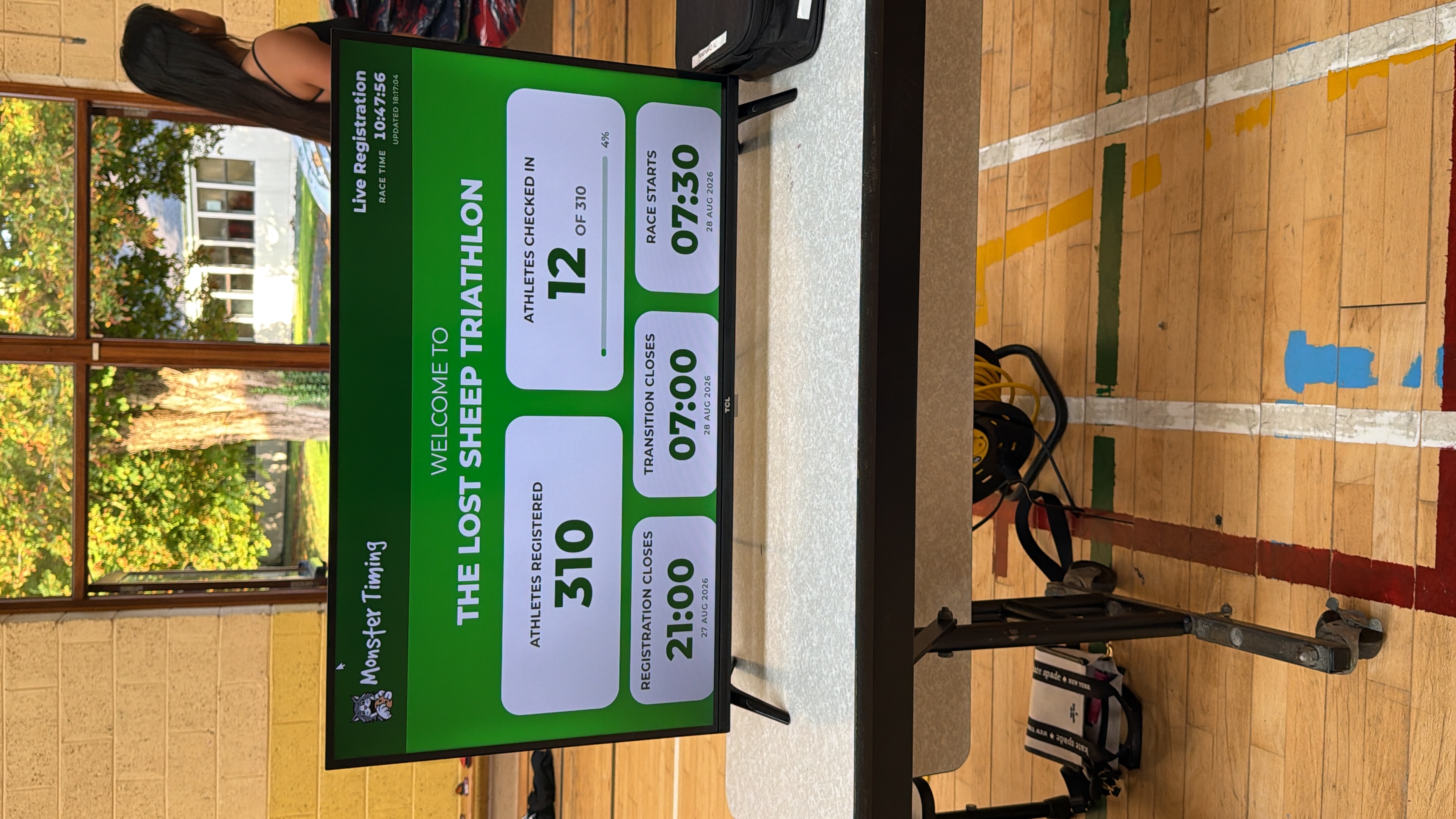
- A live registration screen showed entries, check-ins, and progress percentages to the event team.
Course progress without calling it GPS.
Ten active timing boxes were deployed for the race: seven on the 80 km bike course and three on the run course. One run timing point was crossed twice, creating an additional run read.
The system used active timing reads and Race Result calculations to estimate athlete speed, progress, next arrivals, and predicted finish times. It was not GPS tracking from individual athlete devices. The public map displayed calculated athlete progress between timing points.
7 active timing points were deployed on the 80 km bike course.
3 active timing points were deployed on the run course, with one point crossed twice.
Race Result calculations used timing reads to estimate athlete speed, progress, next arrivals, and finish times.
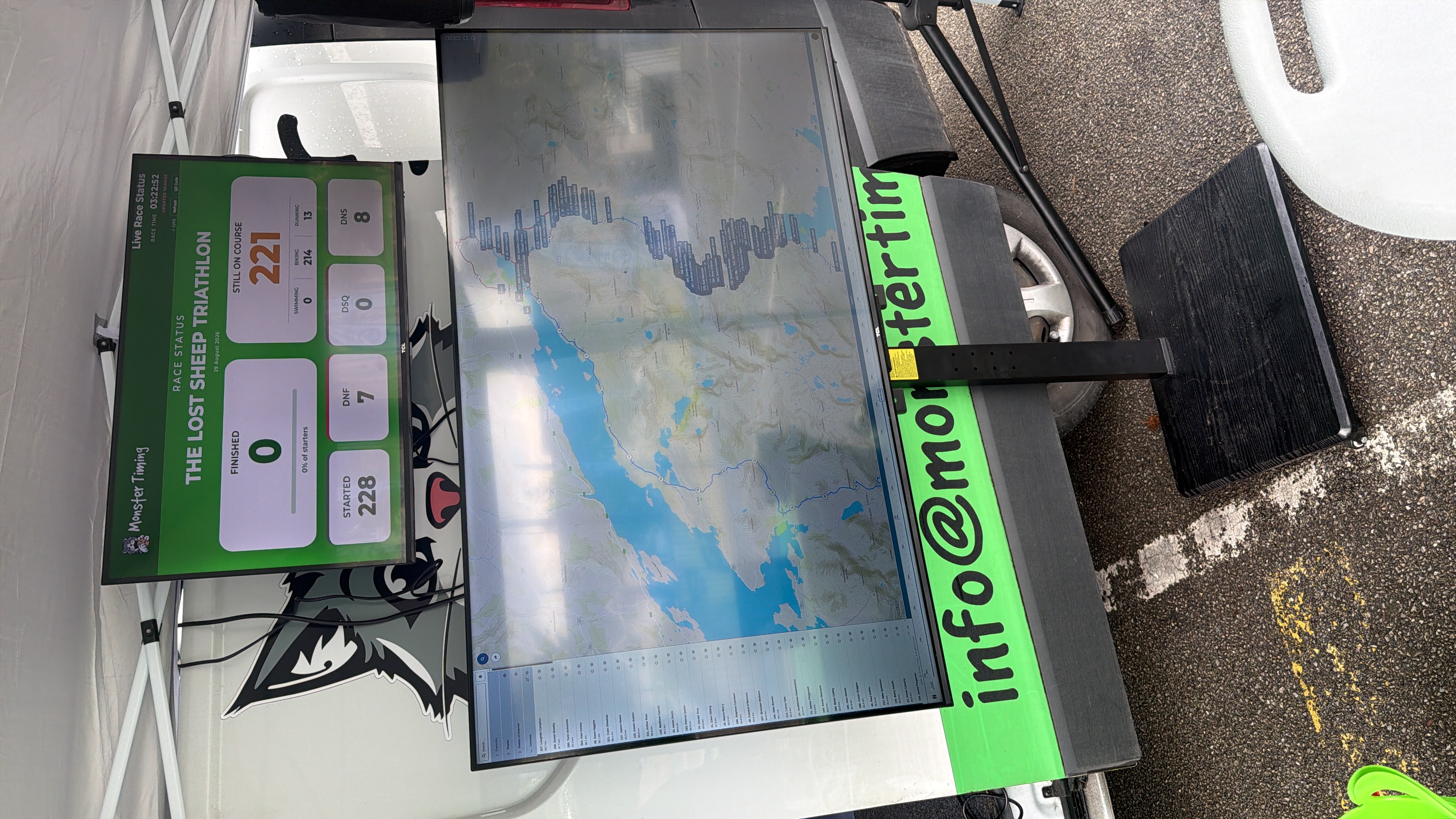
The public map showed athlete names and bib numbers as calculated progress moved through the course.
A shared view of the race at the finish.
A live race dashboard gave the event team a simple overview of athletes swimming, biking, running, finished, disqualified, or still expected. It also helped the finish-line team prepare for predicted incoming athletes.
The dashboard was useful to the race director, timing team, finish-line staff, commentators, and event support personnel. The tracking map was also publicly available through the Monster Timing website, where spectators could search for and filter individual athletes by name and bib number.
Better information for organisers, marshals, spectators, and athletes.
The connected setup gave the organising team a more accurate record of who had arrived, better visibility of athletes still on course, and clearer preparation for the finish line. Athletes received digital split information through WhatsApp, with a link to the full online results.
Digital records reduced manual counting and made athlete details easier to verify.
Active timing reads and calculated progress helped staff monitor the field and the last athletes.
Spectators could follow the public map while athletes received detailed digital splits and results.
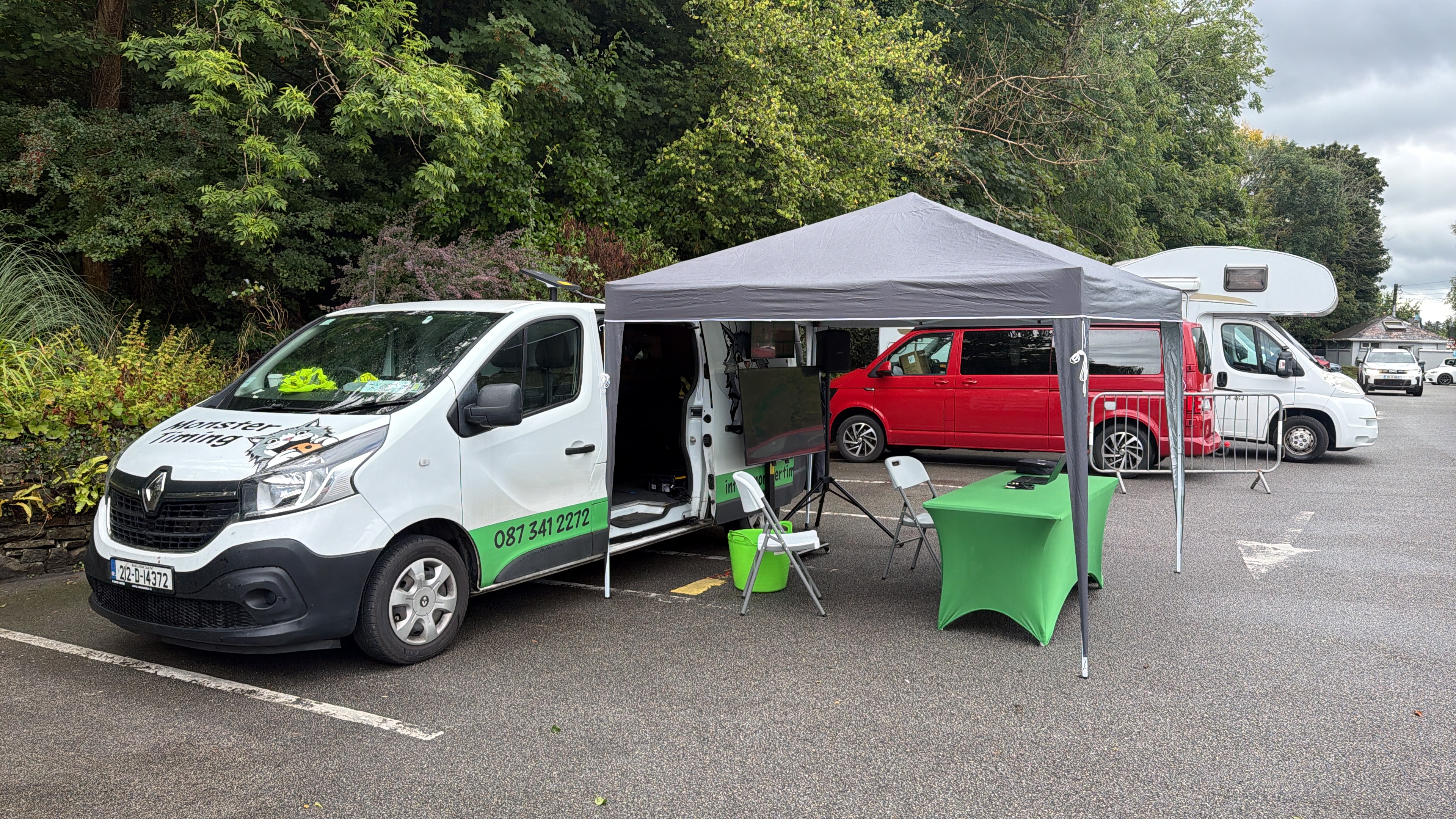
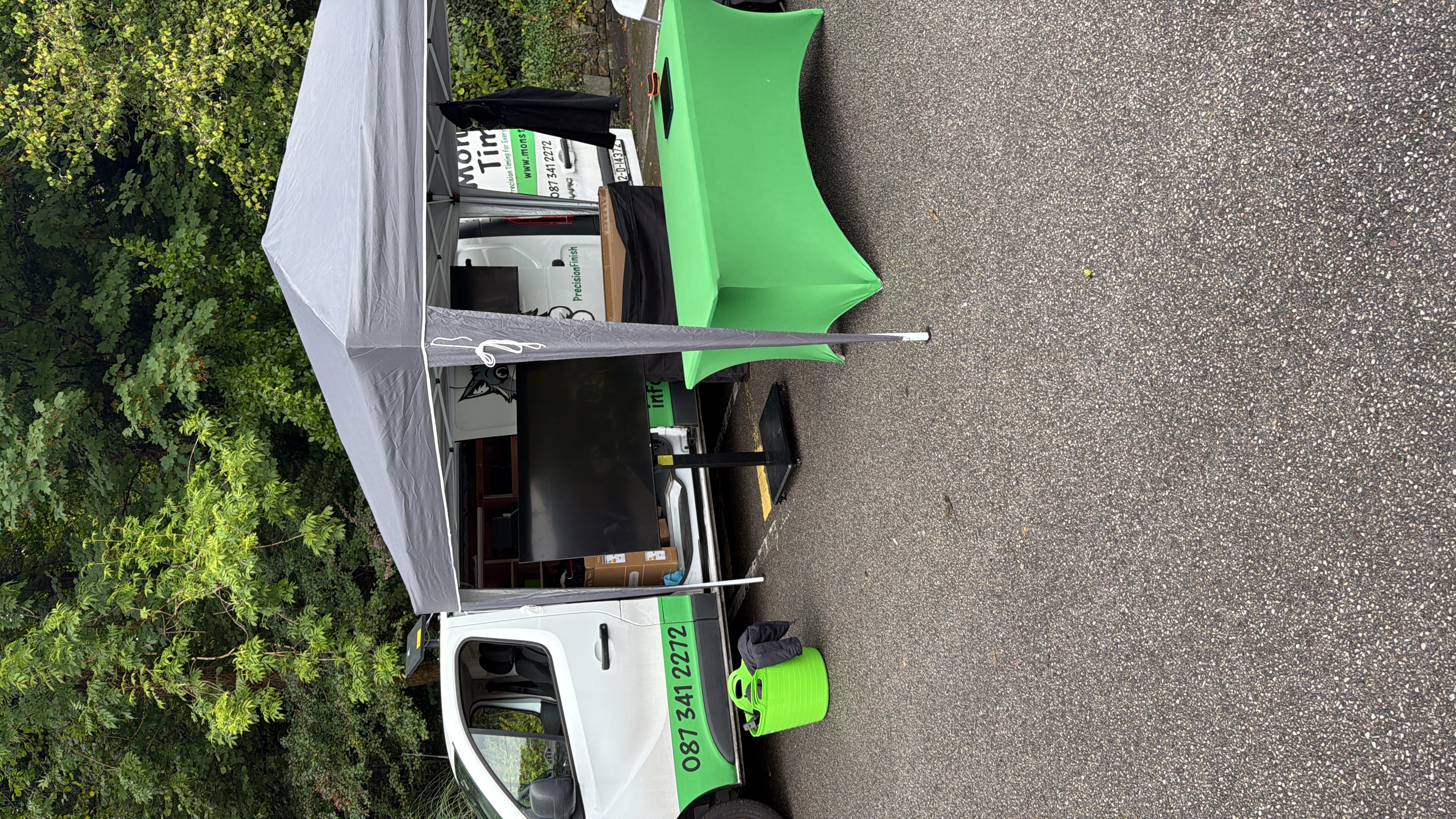
The timing operation on site.
Ready to take the pressure off race day?
Tell us about your event and we'll build a timing plan around your course, your volunteers, and your budget. No race too small.